The Best Temples in Ayutthaya and How to See Them in One Day
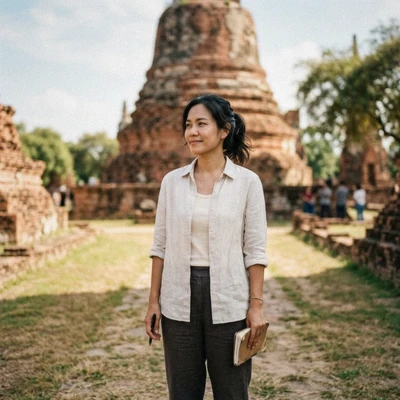
The best temples in Ayutthaya, inscribed by UNESCO as the Historic City of Ayutthaya in 1991, are Wat Mahathat for the Buddha head grown into a bodhi tree, Wat Phra Si Sanphet for its three royal chedis, Wat Chaiwatthanaram for the riverside prang at sunset, and four more sites that between them cover a former royal temple, a free reclining Buddha, a chedi you can climb, and a living temple that was never abandoned. Most day visitors manage between four and six of these in a single day, not all seven, and this guide lays out what each one actually shows you, what it costs, and the order that makes the ground you cover make sense rather than doubling back across the island.
Quick answer
The best temples in Ayutthaya are Wat Mahathat, Wat Phra Si Sanphet and Wat Chaiwatthanaram, with Wat Ratchaburana, Wat Yai Chai Mongkhon, Wat Lokayasutharam and Wat Phanan Choeng rounding out a full day. Most visitors see four to six of the seven rather than all of them, since the sites sit far enough apart that covering every one adds real transport time between stops.
Key takeaways
- Wat Mahathat, home of the tree-root Buddha head, is the single most photographed temple and worth prioritizing if your time is short
- Wat Phra Si Sanphet and Wat Ratchaburana sit close together and pair naturally in one stop, and both are on the seven-hour temple day with lunch at $33 (about 1,090 baht)
- Wat Lokayasutharam is free to visit, an open-air reclining Buddha with no admission fee at all
- Wat Chaiwatthanaram, reopened in full since its restoration finished in 2024, is the temple to save for late in the day
- For the fee breakdown across every site, including whether the combined pass at 220 baht (about $6.65) is worth it, see what a day in Ayutthaya costs
- Small-group Ayutthaya temple tours build the visiting order below into the itinerary for you, so the route planning is already done
The Temples Compared
Prices below are for foreign visitors at 33 baht to the US dollar, checked in mid-August 2026. Thai nationals enter Fine Arts Department sites free.
| Temple | Admission | Time to allow | What it is known for |
|---|---|---|---|
| Wat Mahathat | 50 baht (about $1.50) | 45 to 60 minutes | The Buddha head grown into bodhi tree roots |
| Wat Phra Si Sanphet | 50 baht (about $1.50) | 30 to 45 minutes | Three bell-shaped royal chedis |
| Wat Ratchaburana | 50 baht (about $1.50) | 20 to 30 minutes | A short walk from Wat Mahathat, climbable prang |
| Wat Chaiwatthanaram | 50 baht (about $1.50) | 45 to 60 minutes | The riverside Khmer-style prang, best in late light |
| Wat Yai Chai Mongkhon | 20 baht (about $0.60) | 30 to 45 minutes | A 62-metre chedi you can climb, plus a reclining Buddha |
| Wat Lokayasutharam | Free, donation box | 15 to 20 minutes | A 42-metre open-air reclining Buddha |
| Wat Phanan Choeng | 20 baht (about $0.60) | 30 to 40 minutes | A living temple with a 19-metre gilded Buddha |
Last verified: August 2026.
Tours That Cover the Headline Temples
These build the temples above into a single day, with the transport between them already worked out.
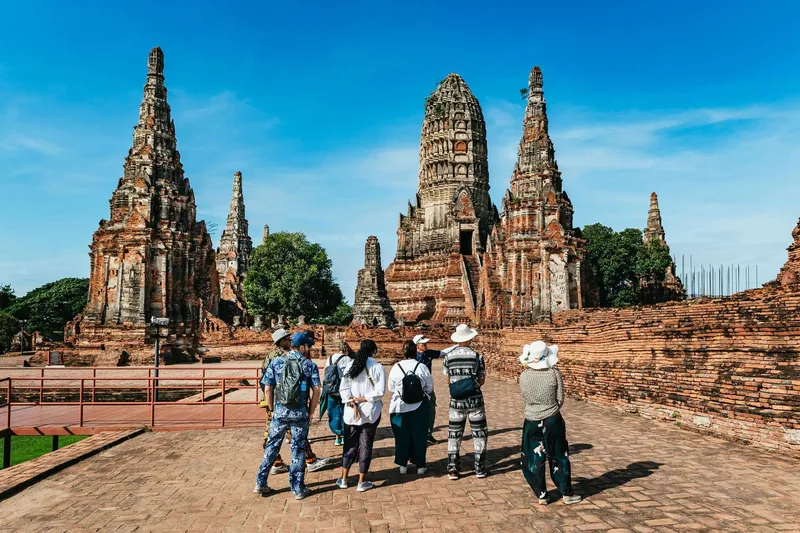 from $33Most Popular — 11,606 Reviews
 From Bangkok: Ayutthaya Temples Guided Tour with Lunch
Embark on a guided day tour of Ayutthaya from Bangkok and discover the former capital of Siam. Explore four of the city's most remarkable temples and enjoy an…
- Explore the ancient Siamese capital of Ayutthaya on a guided tour from Bangkok
- Visit 4 different temples and learn the fascinating history of the city
- Discover Wat Phra Si Sanphet, which formed the heart of the royal complex
- Enjoy an authentic Thai lunch at a local restaurant featuring local specialties
 from $37Top Rated 4.9★
 Bangkok: Ayutthaya Experience with Boat Ride & Tickets
Explore the ancient UNESCO city of Ayutthaya on a full-day tour from Bangkok. Discover majestic temple ruins, serene Buddha statues and the River of Kings on a relaxed…
- Immerse yourself in the history of Ayutthaya, the former capital of Siam
- Explore the ancient city's temple ruins and serene Buddha statues
- Visit Wat Mahathat and see the iconic Buddha head cradled by tree roots
- Cruise the River of Kings on a boat ride past local riverside life
 from $37Floating Market & Boat
 Bangkok: Ayutthaya Temples & Floating Market Boat Experience
Discover Ayutthaya, a UNESCO World Heritage Site, on a full-day tour from Bangkok. Explore ancient temples, enjoy a scenic boat ride, visit the Ayothaya Floating Market and taste…
- Marvel at the Buddha head entwined with tree roots at Wat Mahathat
- Explore Wat Yai Chai Mongkhon, a temple with a large chedi and statues
- Visit the Ayothaya Floating Market and try local Thai specialties
- Discover Wat Chaiwatthanaram, known for its Khmer-style architecture
Wat Mahathat
Wat Mahathat
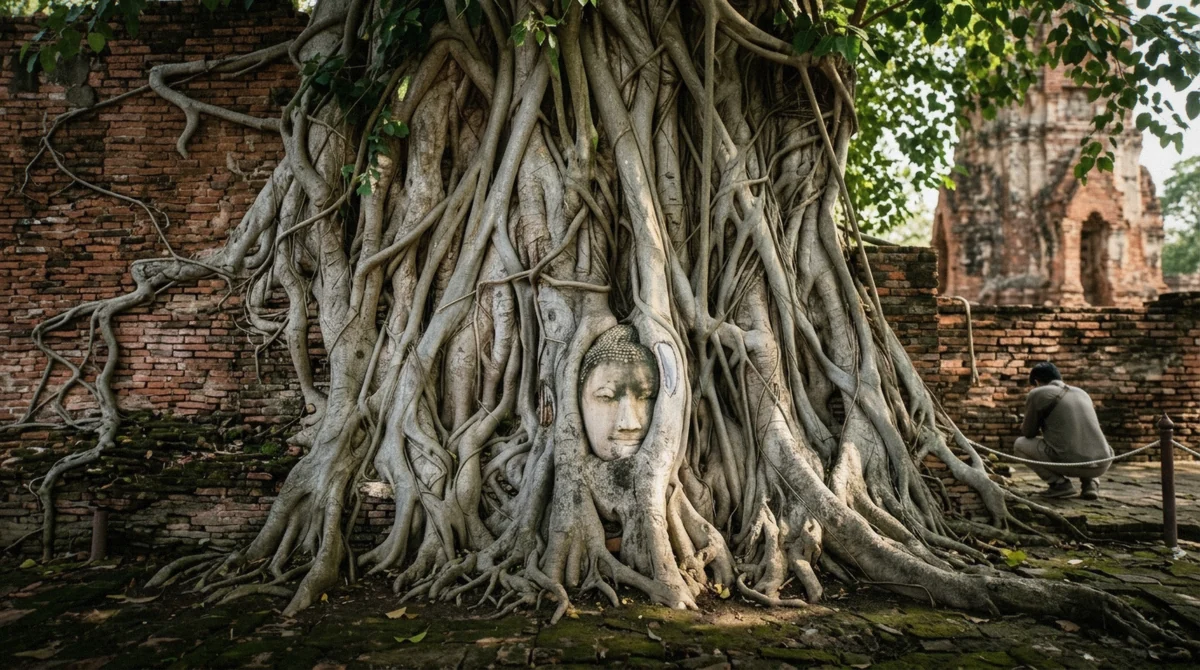
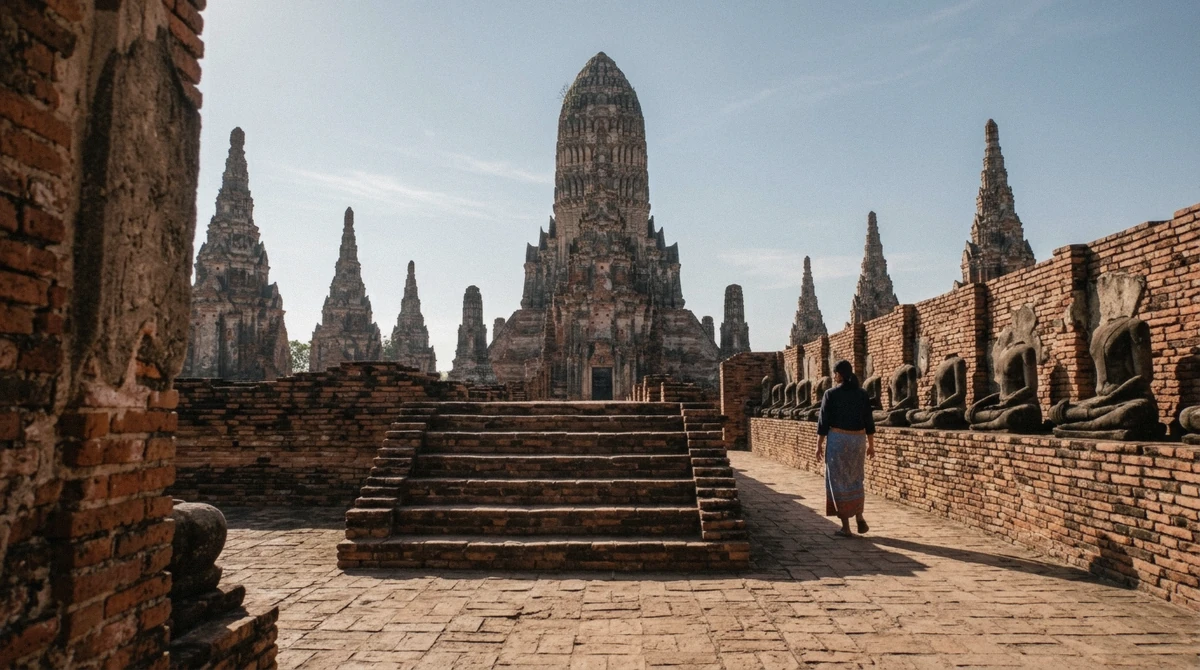
Wat Mahathat is the temple most people picture when they think of Ayutthaya, and its centrepiece is a sandstone Buddha head that has grown into the roots of a bodhi tree over the decades since the temple's ruin. Admission is 50 baht (about $1.50), and 45 to 60 minutes is enough to see the head, the surrounding prangs, and the rows of headless Buddha images that line the site. It sits at the centre of the historical park, which makes it a natural first or second stop on almost any route through the ruins.
The custom around the Buddha head is worth knowing before you get there rather than working it out on the spot. Anyone photographed beside it crouches so their own head does not rise above the Buddha's, and an attendant is usually on hand to remind visitors of this if they forget. It is etiquette and local custom rather than a posted regulation, but it is followed consistently, and it is the one moment on this route where getting it wrong is genuinely visible to everyone else standing there.
Wat Phra Si Sanphet
Wat Phra Si Sanphet
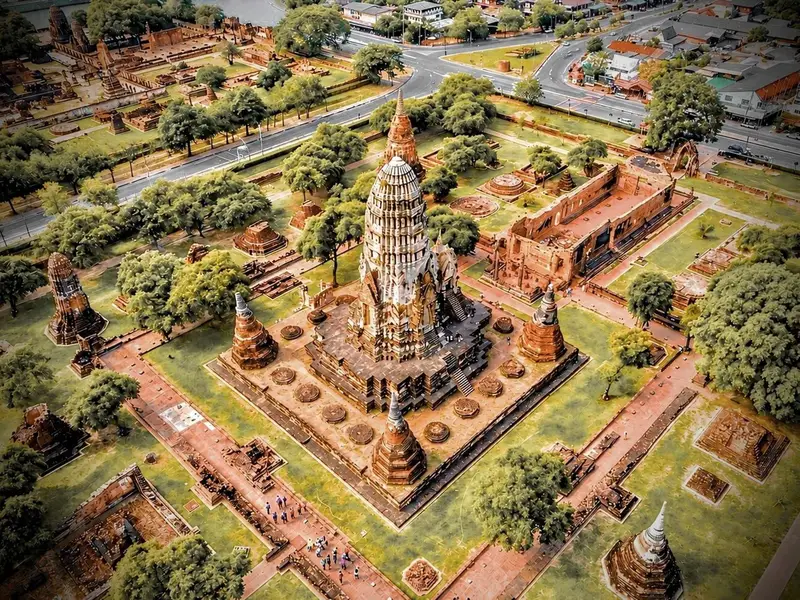
Wat Phra Si Sanphet was the royal temple within the old palace compound, and unlike most of the other sites on this list, no monks ever lived here and no public worship took place, it existed purely for royal ceremony. Its three bell-shaped chedis hold the ashes of Kings Borommatrailokkanat, Borommarachathirat III and Ramathibodi II, built in 1492 and 1529, and restored by the Fine Arts Department in 1956. Admission is 50 baht (about $1.50), and 30 to 45 minutes covers the chedis and the surrounding terrace comfortably.
The three chedis in a row are the most recognizable silhouette in Ayutthaya after the Wat Mahathat Buddha head, and the open ground around them means there is very little shade, so this is a stop better made earlier in the day than at midday in the hot season.
Wat Ratchaburana
Wat Ratchaburana
Wat Ratchaburana sits close enough to Wat Mahathat, about a two-minute walk, that most itineraries pair the two rather than treating them as separate stops. Admission is 50 baht (about $1.50), and the central prang here can be climbed on steep interior stairs, a different kind of experience from the flat ground at most of the other sites, so 20 to 30 minutes is usually enough unless you plan to make the climb, which adds time and is not suited to anyone uneasy on narrow steps.
Because it sits so close to Wat Mahathat, this is a low-cost add to any route through the historical park's core rather than a separate trip in itself.
Wat Chaiwatthanaram
Wat Chaiwatthanaram
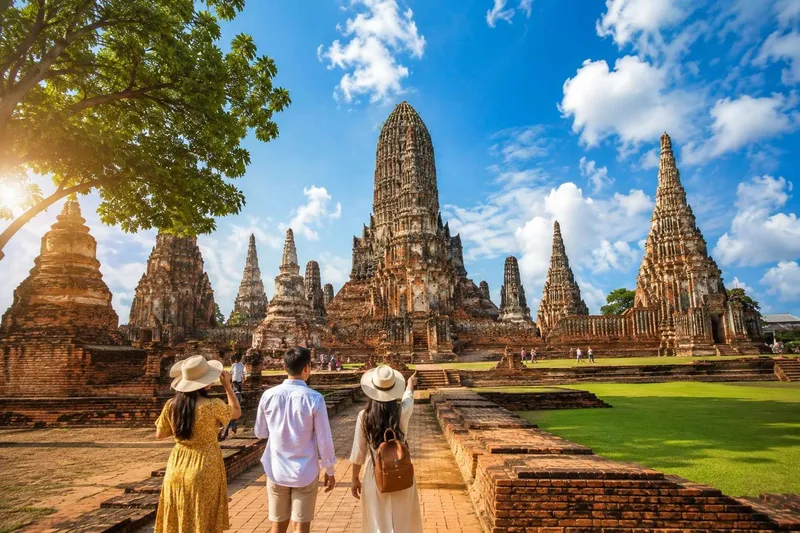
Wat Chaiwatthanaram is the riverside temple with the tall central prang that shows up in most of the best photographs taken in Ayutthaya, and it is fully open again after a twelve-year restoration, funded jointly by American and Thai bodies at a cost of about $1.8 million, that concluded on 15 November 2024. Admission is 50 baht (about $1.50), open 08:00 to 18:30, and 45 to 60 minutes covers the main courtyard and the smaller surrounding chedis.
This is the temple to save for late afternoon if your route allows it, the riverside setting catches better light as the day goes on. Independent shops opposite the entrance rent traditional Thai dress for photographs, running about 200 to 300 baht (about $6 to $9), with a parasol around 50 baht extra; the temple itself does not run these shops and charges nothing for the practice. It sits further from the station and the other core temples than most of this list, which is one reason a tuk-tuk hired for the day, rather than walking, makes sense once you reach this stop.
Wat Yai Chai Mongkhon
Wat Yai Chai Mongkhon
Wat Yai Chai Mongkhon sits east of the main island, and its main chedi, about 62 metres tall, is one of the few structures in Ayutthaya you can actually climb, with steps leading up to a viewing platform. A large reclining Buddha, rebuilt in 1965, sits in the grounds below. Admission is 20 baht (about $0.60) for foreign visitors, free for Thai nationals, and the site is open 08:00 to 17:00.
Allow 30 to 45 minutes, more if you plan to climb the chedi steps, which are steep enough to slow most visitors down.
Because it sits apart from the historical park's core cluster, this is a stop worth grouping with Wat Phanan Choeng, which sits on a similar side of the island, rather than squeezed between the central temples on a tight schedule.
Wat Lokayasutharam
Wat Lokayasutharam
Wat Lokayasutharam holds an open-air reclining Buddha, known as Phra Buddhasaiyart, 42 metres long and 8 metres high, uncovered to the sky and free to visit with only a donation box at the entrance. It is one of the few genuinely free stops on this list, and at 15 to 20 minutes it is also one of the quickest, which makes it an easy addition to a route rather than a destination that needs its own dedicated time slot.
The scale of the figure is the whole point here, there is no roofed hall to frame it, so you see the entire length of the reclining Buddha against open sky in a way none of the roofed or ruined halls elsewhere in Ayutthaya allow.
Wat Phanan Choeng
Wat Phanan Choeng
Wat Phanan Choeng is a living temple that was never abandoned after Ayutthaya's fall, unlike most of the ruins elsewhere on this list, and it holds a 19-metre gilded seated Buddha known as Luang Pho To. Admission is 20 baht (about $0.60), paid at a small booth at the entrance. Because it remains an active place of worship rather than a ruin, the dress code here is enforced strictly: shoulders and knees covered, shoes off in the main hall.
Allow 30 to 40 minutes.
This is the temple where the difference between a ruin site and a living one is most obvious, incense smoke, active offerings, and monks moving through the halls, which is worth experiencing even if it means adjusting what you wear before you arrive rather than after.
What to Wear and How to Behave at Each Kind of Site
Ayutthaya's temples split into two categories that ask different things of visitors, and knowing which is which before you set out saves you a wasted trip back to change. The ruin sites, Wat Mahathat, Wat Phra Si Sanphet, Wat Ratchaburana, Wat Chaiwatthanaram, are relaxed in practice, open-air complexes with no active shrine hall to enter. Active temples like Wat Phanan Choeng, and Bang Pa-In Summer Palace if it is part of your day, are strict: shoulders and knees covered, shoes off inside shrine halls.
Cover-up clothing is available to borrow at Bang Pa-In, and Thai dress hire runs about 200 to 300 baht near Wat Chaiwatthanaram if you want the photographs rather than just the coverage.
The practical rule that saves you thinking about this site by site: dress for the strictest place on your itinerary, and you never have to reconsider it as you move between temples. If Wat Phanan Choeng or Bang Pa-In is anywhere on your day's route, plan your outfit around that stop and the ruin sites will never be a problem.
The Buddha-head etiquette at Wat Mahathat, covered above, applies specifically there and nowhere else on this list, since it is the only site with a Buddha image at ground level in that particular way. At every temple, active or ruin, the same underlying respect applies: these are places of worship and sites of cultural weight, not a backdrop, so never climb on or pose above a Buddha image, and never approach or touch a monk or his robes.
The Temples Most Visitors Skip, and Probably Should
With only one day, most visitors are better off seeing four to six temples well than rushing all seven, and Wat Phanan Choeng and Wat Yai Chai Mongkhon are the two most commonly dropped, honestly for reasonable reasons. Both sit further from the historical park's central cluster, on the opposite side of the island from Wat Mahathat and Wat Phra Si Sanphet, which means real transport time to reach either one that could otherwise go toward a second look at the core sites.
That said, dropping them is a genuine trade-off rather than a free pass. Wat Phanan Choeng is the only living temple on this list, and skipping it means skipping the one site where Ayutthaya's temples feel like an active place of worship rather than a preserved ruin. Wat Yai Chai Mongkhon is the only chedi here you can actually climb.
If either of those appeals more than a fourth or fifth ruin site, it is worth keeping on the route rather than cutting by default.
Building Your Route
If you have half a day or less
Wat Mahathat and Wat Ratchaburana together, they sit two minutes apart and cover the single most recognizable sight in Ayutthaya.
If you have a full day and want the classic route
Wat Mahathat, Wat Ratchaburana, Wat Phra Si Sanphet and Wat Chaiwatthanaram, saving the riverside temple for late afternoon light.
If you want to see something for free
add Wat Lokayasutharam, a quick stop with no admission fee at all.
If you want a living temple rather than only ruins
add Wat Phanan Choeng, and dress for its strict code from the start of the day.
If you want to climb something
add Wat Yai Chai Mongkhon, the only chedi on this list with a viewing platform you can climb to.
A One-Day Route, Hour by Hour
This order groups the temples by how close they sit to each other, so the day moves across the island once rather than back and forth.
-
Morning
Wat Mahathat
The Buddha head in the tree roots, before the midday crowd and heat build.
-
Shortly after
Wat Ratchaburana
A two-minute walk from Wat Mahathat, easy to pair with it.
-
Mid-morning
Wat Phra Si Sanphet
The three royal chedis, still comfortable before the sun is highest.
-
Around midday
Wat Lokayasutharam
A quick, free stop, the open-air reclining Buddha needs no roofed hall to shelter under from the heat.
-
Early afternoon
Wat Yai Chai Mongkhon or Wat Phanan Choeng
Pick one or both depending on your pace so far, both sit further east on the island.
-
Late afternoon
Wat Chaiwatthanaram
Saved for last deliberately, the riverside prang catches the best light as the day winds down.
The Temples in Visiting Order
Pins follow the route above, from the historical park's central cluster out to the riverside temple saved for late in the day.
Making the Route Work for You
The order above assumes a tuk-tuk hired for the day rather than walking, since Wat Yai Chai Mongkhon, Wat Phanan Choeng and Wat Chaiwatthanaram all sit meaningfully further from the central cluster than the walking distance most visitors expect from a map. If small-group Ayutthaya temple tours sound easier than arranging that transport yourself, several run this same visiting order, or a close variant of it, already worked out with a guide.
How many temples you actually see matters less than how much time each one gets. Four temples seen properly, with time to look rather than just photograph, tell you more about Ayutthaya than seven rushed between tuk-tuk rides. Pick your four or five from the list above based on what you actually want to see, the tree-root Buddha head, the royal chedis, the riverside prang at sunset, the living temple, and build the rest of the day around those rather than trying to complete the set.
How many temples the season allows
The number of sites you can walk in one day is set by the weather more than by your energy, and this is the table we wish someone had shown us the first time. Full detail on the months sits in the best time to visit Ayutthaya.
| Season | Months | Temples a day realistically allows | What gives first |
|---|---|---|---|
| Cool and dry | November to February | Six or seven, including one off the island | Daylight, not stamina |
| Hot | March to May | Four, with a long lunch in the middle | Your appetite for open brick after noon |
| Early rainy | May to July | Five, with a plan for a downpour | An hour spent sheltering somewhere |
| Late rainy | August to October | Four, and check the river level first | Access, if the water is high |
If you are booking a guided day instead
A guided itinerary trades choice for the logistics being handled, and the sensible way to pick one is by which temples it names. the guided four-temple itinerary with lunch covers the island core, which is the right call for a first visit. The heritage day that adds a river cruise trades one temple for time on the water past the riverside sites. If the ruins are not obviously your thing yet, our honest verdict on Ayutthaya is the more useful page to read first.
Frequently Asked Questions
Which temples in Ayutthaya are worth visiting in one day?
Wat Mahathat, Wat Phra Si Sanphet and Wat Chaiwatthanaram form the core of most one-day routes, with Wat Ratchaburana added as a two-minute detour from Wat Mahathat and Wat Lokayasutharam as a quick, free stop.
How many temples can you realistically see in a day?
Most visitors manage four to six of the seven covered here rather than all seven, since the sites further east, Wat Yai Chai Mongkhon and Wat Phanan Choeng, add real transport time on top of the central cluster.
Which Ayutthaya temple has the Buddha head in the tree?
Wat Mahathat, where a sandstone Buddha head has grown into the roots of a bodhi tree, is the single most photographed sight in Ayutthaya.
Which Ayutthaya temples are free to enter?
Wat Lokayasutharam, the open-air reclining Buddha, is free with only a donation box. Every other temple on this list charges a small admission fee, either 50 baht or 20 baht for foreign visitors.
What should you wear to visit the Ayutthaya temples?
Ruin sites like Wat Mahathat and Wat Phra Si Sanphet are relaxed in practice. Active temples like Wat Phanan Choeng enforce a strict dress code: shoulders and knees covered, shoes off in the main hall. Dress for the strictest site on your list and the ruins are never a problem.
Which temple is best at sunset?
Wat Chaiwatthanaram, the riverside temple with the tall central prang, catches noticeably better light in late afternoon than at midday, which is why most routes save it for last.
In what order should you visit the Ayutthaya temples?
Starting at the central cluster, Wat Mahathat and Wat Ratchaburana, then Wat Phra Si Sanphet, before moving out to the sites further from the centre and finishing at Wat Chaiwatthanaram for the late-afternoon light, keeps the day moving across the island rather than doubling back.