Best Time to Visit Ayutthaya: A Month-by-Month Guide
The best time to visit ayutthaya is the cool, dry season from November to February, when average highs sit in the low thirties Celsius rather than the mid-thirties of April, and rain is at its lightest all year. That window is not the only workable one. Early mornings are manageable even in the hot season, the rainy season rarely closes anything, and Songkran in mid-April is worth experiencing once even though it is a poor day to walk the ruins. What follows is the month-by-month reality, including the two things every visitor should know before booking: how hot April genuinely gets, and what flood risk actually means for a day trip.

Quick answer
The best time to visit Ayutthaya is November through February, the cool and dry season, when average highs stay in the low thirties Celsius and rainfall is at its lowest. April is the hottest month, with average daily highs around 36 degrees Celsius, and September is the wettest, so both are worth planning around rather than avoiding outright.
Key takeaways
- Cool season (November to February) is the most comfortable window for walking the historical park all day
- Songkran, 13 to 15 April 2026, is a wonderful thing to experience but a hard day to tour a shadeless site, covered in full below
- Whatever month you go, Ayutthaya temple tours that run year-round start early to beat the heat, including the floating market and temples combination
- Getting there early matters more than the month; our getting-there guide covers the first trains out of Bangkok
- Flood risk is real but seasonal and narrow, roughly September to November, not a year-round concern
Trips That Run Through Every Season
These operate year-round regardless of the month, priced from $33 to $37 (at a rate of about 33 baht to the US dollar, checked 15 August 2026), with early departures built in to make the most of the cooler morning hours.
 from $37Top Rated 4.9★
 Bangkok: Ayutthaya Experience with Boat Ride & Tickets
Explore the ancient UNESCO city of Ayutthaya on a full-day tour from Bangkok. Discover majestic temple ruins, serene Buddha statues and the River of Kings on a relaxed…
- Immerse yourself in the history of Ayutthaya, the former capital of Siam
- Explore the ancient city's temple ruins and serene Buddha statues
- Visit Wat Mahathat and see the iconic Buddha head cradled by tree roots
- Cruise the River of Kings on a boat ride past local riverside life
 from $37Floating Market & Boat
 Bangkok: Ayutthaya Temples & Floating Market Boat Experience
Discover Ayutthaya, a UNESCO World Heritage Site, on a full-day tour from Bangkok. Explore ancient temples, enjoy a scenic boat ride, visit the Ayothaya Floating Market and taste…
- Marvel at the Buddha head entwined with tree roots at Wat Mahathat
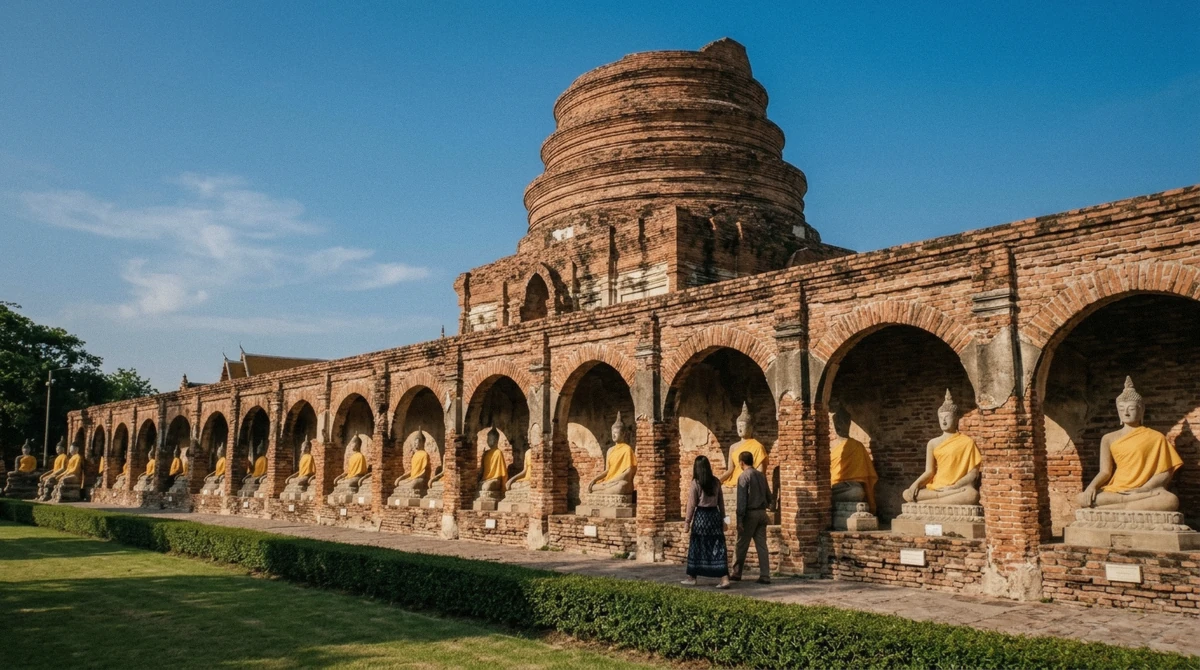
- Explore Wat Yai Chai Mongkhon, a temple with a large chedi and statues
- Visit the Ayothaya Floating Market and try local Thai specialties
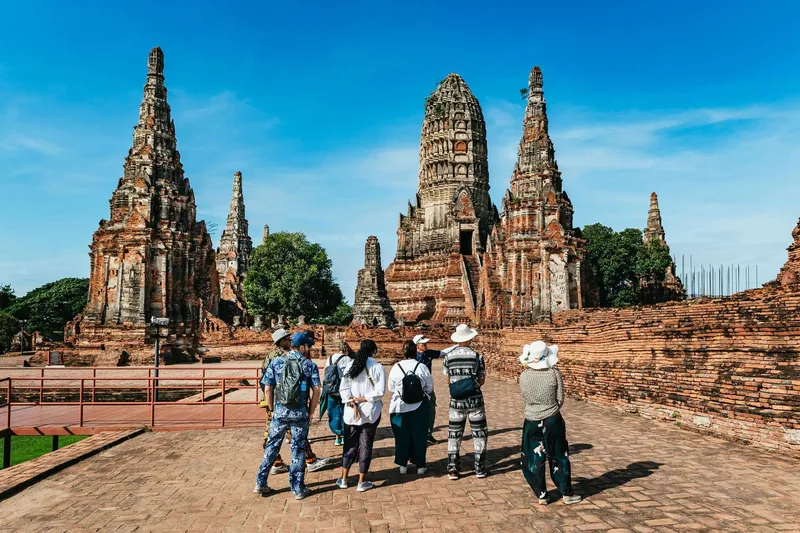
- Discover Wat Chaiwatthanaram, known for its Khmer-style architecture
 from $33Most Popular — 11,606 Reviews
 From Bangkok: Ayutthaya Temples Guided Tour with Lunch
Embark on a guided day tour of Ayutthaya from Bangkok and discover the former capital of Siam. Explore four of the city's most remarkable temples and enjoy an…
- Explore the ancient Siamese capital of Ayutthaya on a guided tour from Bangkok
- Visit 4 different temples and learn the fascinating history of the city
- Discover Wat Phra Si Sanphet, which formed the heart of the royal complex
- Enjoy an authentic Thai lunch at a local restaurant featuring local specialties
The Three Seasons at a Glance
Ayutthaya, like the rest of central Thailand, runs on three broad seasons rather than four. None has a hard start or end date, but the pattern below holds most years.
| Season | Months | Weather | Crowds | Verdict for a day trip |
|---|---|---|---|---|
| Cool and dry | November to February | The most comfortable temperatures of the year, low humidity, minimal rain | Busiest season, the most popular time to go | The best overall window, book transport a little ahead |
| Hot | March to May | The hardest heat of the year, peaking in April | Quieter than the cool season, thinner tour groups | Doable with an early start and heavy hydration, hardest at midday |
| Rainy | May to October | Regular but often short afternoon downpours, peak rain in September | Fewer tourists, easier to move around the temples | Underrated: mornings are frequently dry, and the ruins do not close for rain |
Month by Month: Temperature and Rainfall
The table below gives long-term climate averages for Ayutthaya, not a forecast for any single year, and different climate records give slightly different peaks; one widely used record puts April closer to 38 degrees Celsius and September closer to 285 mm of rain. Total annual rainfall runs about 1,347 mm across the year, most of it concentrated in the five months from May to September. Use the figures here as the typical pattern rather than an exact prediction.
| Month | Average high / low | Rainfall | Verdict for a day trip |
|---|---|---|---|
| January | 33°C / 22°C | 5 mm, about 2 rainy days | One of the two driest, most comfortable months of the year |
| February | 34°C / 24°C | 8 mm, about 3 rainy days | Still cool and dry, heat starting to build |
| March | 36°C / 26°C | 24 mm, about 6 rainy days | Heat matches April in the daytime, though nights stay a touch cooler |
| April | 36°C / 27°C | 60 mm, about 11 rainy days | The hottest month; warmest nights of the year and Songkran falls here |
| May | 35°C / 27°C | 115 mm, about 17 rainy days | Still hot, rainy season beginning in earnest |
| June | 34°C / 26°C | 114 mm, about 18 rainy days | Regular rain, generally short afternoon showers rather than all-day rain |
| July | 33°C / 26°C | 109 mm, about 19 rainy days | Similar to June, mornings often still workable |
| August | 33°C / 26°C | 142 mm, about 20 rainy days | Rain becoming more frequent, humidity high |
| September | 32°C / 25°C | 228 mm, about 21 rainy days | The wettest month of the year and the most rainy days |
| October | 32°C / 25°C | 156 mm, about 15 rainy days | Rain easing, flood risk highest this month and into November |
| November | 32°C / 24°C | 35 mm, about 7 rainy days | Transitioning into the cool season, rain dropping off fast |
| December | 32°C / 22°C | 4 mm, about 1 rainy day | The driest month of the year, alongside January the most comfortable |
Added together, those columns come to about 1,347 mm of rain a year, and more than half of it falls in the four months from July to October. That is the single most useful thing the table says: the wet season is not spread evenly, it is concentrated, and the difference between a September visit and a November one is far larger than the two months between them suggest. Prices on the ground move with it too, and we convert every figure on this site at about 33 baht to the US dollar, the rate in the middle of August 2026.
The Cool Season, November to February
This is the best time to visit Ayutthaya for most travelers, and the reason is simply comfort: average highs stay in the low thirties Celsius, overnight lows drop into the low twenties, and rainfall is at its lowest all year, down to about 4 mm in December, the driest month, alongside a similarly dry January. Walking the historical park in this window is genuinely pleasant rather than an exercise in heat management, and it is also when the Fine Arts Department has, in recent cool seasons, floodlit selected monuments in the evening, among them Wat Chaiwatthanaram, Wat Yai Chai Mongkhon and the reclining Buddha at Wat Lokayasutharam. A same-day trip from Bangkok usually leaves before those lights come on, so treat that as a reason to consider staying over rather than an expectation for a day trip.
The trade-off is popularity. This is the busiest season, so the queue at the Wat Mahathat Buddha head and general foot traffic at the headline temples both run higher than in the hot or rainy months. If crowds bother you more than heat does, weigh that against the comfort gain before assuming cool season is automatically the right call.
This is also the only window in which walking between the ruins is genuinely pleasant rather than endured, which changes which itinerary makes sense. In the cool months we would happily take on six or seven sites; our temple-by-temple guide sets out a route that works at that pace. From March onward, four is the honest ceiling.
The Hot Season, March to May
April is the hottest month, with average daily highs around 36 degrees Celsius and the warmest overnight lows of the year, around 27°C. March runs nearly as hot in the daytime, at 36°C as well, though its nights are a couple of degrees cooler. This is the season that makes or breaks a day trip on timing: the historical park is almost entirely shadeless, and walking between temples at midday in this window is the hardest physical part of any Ayutthaya day, hot season or not.
The upside is thinner crowds than the cool season and a genuinely workable early morning, roughly the first two hours after the gates open, before the heat builds. Anyone visiting in March, April or May should plan around that early window rather than a leisurely late-morning start, carry more water than feels necessary, and expect the middle of the day to be the point where energy and enthusiasm both dip.
If you are travelling in these months, the itinerary that saves you is one with a lunch stop built into the middle of the day. The four-temple day with a Thai lunch puts you indoors at roughly the hour the open brick becomes punishing, and the heritage day that adds a river cruise gets you onto the water where there is at least a breeze.
The Rainy Season, May to October
The rainy season runs roughly May to October, and it is more forgiving than its reputation suggests. Rain in central Thailand typically arrives as a shorter, heavier afternoon downpour rather than an all-day soak, which means mornings are frequently dry even in September, the wettest month at about 228 mm and around 21 rainy days on average. The temples do not close for rain, and this season brings noticeably thinner crowds than the cool season, an underrated trade for anyone who packs a light rain layer and does not mind adjusting the day's order if a downpour hits.
The exception worth planning around sits at the tail end of this season, covered in the flooding section below: the risk window running roughly September to November is a genuinely different consideration from an ordinary rainy afternoon.
Songkran and What It Means for a Day Trip
Songkran, the Thai New Year water festival, falls on 13 to 15 April 2026. It is nationwide, and Ayutthaya, with its own royal and religious history, marks it as enthusiastically as anywhere else in central Thailand. Water throwing happens in the streets, at temples and along main roads, and it is genuinely joyful to be part of once in your life.
It is also, honestly, a poor day to try to walk a shadeless archaeological site with a camera. Roads get busy with celebrations, many ordinary businesses close for the holiday, and carrying anything electronic through a water fight is its own kind of stress. If Songkran timing lines up with your trip and you want the festival experience, plan for that specifically, perhaps a shorter temple visit earlier in the day before the water throwing peaks.
If you are visiting purely for the historical park itself, choosing a different week avoids the crowds, the closures and the risk to your gear entirely.
Flooding and the Late Rainy Season
Ayutthaya's historic island flooded severely in 2011, submerged for over a month starting 4 October 2011, with Wat Chaiwatthanaram standing under about 2 metres of water at the height of the flood. The restoration that followed, jointly funded by American and Thai bodies at a cost of about $1.8 million, ran twelve years and concluded on 15 November 2024; the temple is open again in full, 08:00 to 18:30, with the standard 50-baht admission. It is a striking example of how serious flooding here can get, and it is worth knowing the history before you go.
It is also, for almost every visitor planning an ordinary trip, not a live risk. The general flood window sits in the late rainy season, roughly September to November, when the Chao Phraya and Pa Sak rivers run highest. Ordinary rainy-season days outside that narrow window are not flood days, and the temples stay open through routine rain.
If your trip falls in September, October or November, it is reasonable to check recent news before you travel, the way you would for any low-lying river city during its highest-water months, but there is no reason to avoid the season outright on the strength of a single severe event well over a decade old.
Best Season by Traveler Type
If you are a photographer chasing the best light and the evening illumination
the cool season, November to February, both for comfortable golden-hour walking and for the chance of catching lit monuments if you stay overnight rather than day-tripping.
If you are traveling with young children
the cool season again, since heat management is the biggest constraint on a family day, not the temples themselves.
If you are sensitive to heat
avoid April and May if you can, or if you cannot, commit to an early start and treat midday as a break rather than fighting through it.
If you are a budget traveler and crowds matter more to you than temperature
the rainy season, May to October, brings thinner crowds and often-dry mornings, minus the late-season flood-risk window.
If you only have one fixed date and cannot choose the month
plan around the time of day instead of the season: an early start and heavy hydration make almost any month workable for a single day.
The Best Time of Day to Walk the Ruins
Ticketed areas of the historical park generally open at 08:00, and the first two hours after opening are the only genuinely cool, quiet stretch of the day in any season. Sunrise itself comes early enough to plan around: around 06:44 in mid-January and as early as 05:55 in mid-July, so the gates open well after first light regardless of season, and arriving right at 08:00 still beats the crowds and the worst of the heat.
The middle of the day, roughly 11:00 to 14:00, is the hardest stretch of any Ayutthaya day, hot season or not, since the historical park offers almost no shade and open brick and gravel radiate heat back at you. Late afternoon light is the best of the day for photographs, particularly at riverside temples like Wat Chaiwatthanaram, but a single-day trip from Bangkok is usually on the road home by then, so treat that golden hour as a reason to consider an overnight stay rather than something a day trip delivers.
Planning Around the Calendar
None of this needs to be complicated. If your travel dates are flexible, the cool season from November to February gives the easiest version of the day. If they are not, an early departure and enough water solve most of what the calendar throws at you, in any month bar the immediate flood-risk window in the late rainy season.
Whatever the month, the temples themselves do not change, and the difference between a good Ayutthaya day and a hard one usually comes down to what time you arrive rather than what week of the year it is.
Frequently Asked Questions
What is the worst time of year to visit Ayutthaya?
Late September through October combines the wettest weather of the year with the highest flood risk, roughly September to November, making it the least reliable window, though the temples themselves generally stay open through it.
Does Ayutthaya flood, and when?
It can, though rarely to the scale of 2011, when the island was submerged for over a month and Wat Chaiwatthanaram stood under about 2 metres of water. The general risk window sits in the late rainy season, roughly September to November; ordinary rainy days outside that window are not flood days.
Is it worth visiting Ayutthaya during Songkran?
For the festival itself, yes, it is a genuinely joyful experience. For touring the shadeless ruins specifically, it is a harder day than most, with busy roads, closed businesses and water everywhere your camera gear has to survive.
How hot does Ayutthaya get in April?
April is the hottest month, with average daily highs around 36 degrees Celsius and the warmest nights of the year, around 27°C. Some climate records put the peak closer to 38 degrees, so treat 36°C as the reliable average rather than a ceiling.
Do the temples close in the rainy season?
No. The historical park stays open through routine rainy-season weather, which typically arrives as a shorter afternoon downpour rather than all-day rain, and mornings are frequently dry even in September, the wettest month.
Is Wat Chaiwatthanaram open now, or still under restoration?
It is fully open. The twelve-year restoration following the 2011 flood concluded on 15 November 2024, and the temple now runs on standard hours, 08:00 to 18:30, with the usual 50-baht foreigner admission.
What time should you arrive to beat both the heat and the crowds?
Right at opening, 08:00. The first two hours are the only stretch of the day that is reliably cool and quiet in any season, and the middle of the day, roughly 11:00 to 14:00, is the hardest on open, shadeless ground.